Generic medicine information · Oncology · Prescription-only

Tucatinib: the oral HER2-positive cancer medicine, its originator Tukysa and listed products

Tucatinib is an oral HER2-targeted kinase inhibitor taken twice daily. In the United States it is approved as Tukysa for HER2-positive breast cancer (in combination with trastuzumab and capecitabine, or as maintenance with trastuzumab and pertuzumab) and, under accelerated approval, for RAS wild-type HER2-positive colorectal cancer.[1]

This page explains the medicine using official sources and lists 5 products as listed by Medicine for World and a manufacturer page in Bangladesh. The originator Tukysa is described from the official label. It is not a complete global list, and regulatory status differs by product and country.[4]

Availability enquiries are handled by Medicine for World. Submission of an enquiry does not confirm regulatory eligibility, supply or delivery. Ownership and commercial disclosure

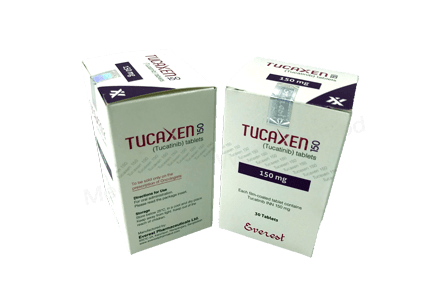
Tucaxen (150 mg) pack, manufacturer as listed: Everest
Tucaxen · Tukysa — Product photos as listed[4]
  • 5 listed productsBrand names as listed; several manufacturers
  • Originator: TukysaSeagen (now Pfizer) · US approval 2020, EU approval 2021
  • Regulatory status variesConfirm with your national authority
  • Prescription-only cancer medicineBoxed warning for liver injury
Quick facts

Tucatinib at a glance

Generic name (INN)
Tucatinib[1]
Medicine class
HER2-targeted tyrosine kinase inhibitor for HER2-positive cancers, taken by mouth[1]
Dosage form
Film-coated tablets, taken twice daily[1]
Strengths (US label)
Tablets 50 mg and 150 mg[1]
Originator
Tukysa · Seagen (a Pfizer company)[1][3]
Approvals
United States: 17 April 2020 · European Union: 11 February 2021[2][3]
Recommended dose (US label)
300 mg twice daily, about 12 hours apart, with or without food[1]
Products in this directory
5 listed products; manufacturer stated for all 5[4]
Supply status
Prescription-only medicine[1]

What is tucatinib?

Tucatinib is the international non-proprietary name of an oral kinase inhibitor that targets HER2. According to the US prescribing information, Tukysa is indicated for HER2-positive breast cancer – together with trastuzumab and capecitabine in advanced unresectable or metastatic disease after one or more prior anti-HER2 regimens (including brain metastases), and, since October 2026, together with trastuzumab and pertuzumab as maintenance after induction therapy – and, with trastuzumab, for RAS wild-type HER2-positive colorectal cancer that progressed after chemotherapy. The colorectal use is an accelerated approval based on response rate and durability of response.[1][4]

In the European Union, where it is authorised as Tukysa (11 February 2021), the listed use is in combination with trastuzumab and capecitabine for adults with locally advanced or metastatic HER2-positive breast cancer who have had at least two prior anti-HER2 regimens.[3] Tukysa was first approved in the United States on 17 April 2020.[2] Approved uses and available strengths differ between countries.

In the HER2CLIMB trial, median overall survival was 21.9 months with Tukysa versus 17.4 months with placebo (hazard ratio 0.66), and median progression-free survival was 7.8 versus 5.6 months (hazard ratio 0.54).[1] Whether tucatinib is suitable, and at which dose, is decided by the treating doctor. Full warnings are in the official product information:

Directory

5 products currently included in this directory

The products below are included for identification and availability-enquiry purposes. Inclusion does not mean that a product is authorised, approved, therapeutically equivalent or available in every country. Confirm regulatory status with the relevant national medicines authority.

Products are listed in alphabetical order. The list is not a ranking and makes no claim that one product is better than another.[4]

5 of 5 products

  • Tucaxen (150 mg) pack, manufacturer as listed: Everest

    Tucaxen

    Product information listed
    Active ingredient as listed
    Tucatinib
    Manufacturer as listed
    Everest Pharmaceuticals Ltd. (manufacturing country listed: Bangladesh)
    Product strength (not a dose recommendation)
    150 mg
    Dosage form
    Tablet
    Pack information
    30 tablets per pot
    Information source
    Product listing dataset[4]
    Information last checked
    October 14, 2026
    Regulatory status
    Not independently verified for this page
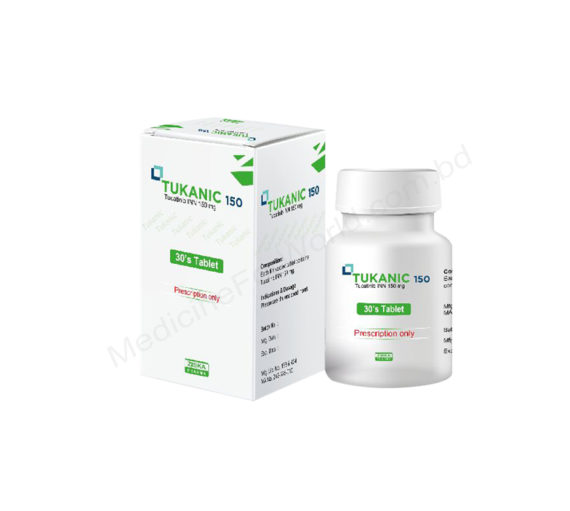
  • Tukanic (150 mg) pack, manufacturer as listed: Ziska

    Tukanic

    Product information listed
    Active ingredient as listed
    Tucatinib
    Manufacturer as listed
    Ziska Pharmaceuticals Ltd. (manufacturing country listed: Bangladesh)
    Product strength (not a dose recommendation)
    150 mg
    Dosage form
    Tablet
    Pack information
    30 tablets per pot
    Information source
    Product listing dataset[4]
    Information last checked
    October 14, 2026
    Regulatory status
    Not independently verified for this page
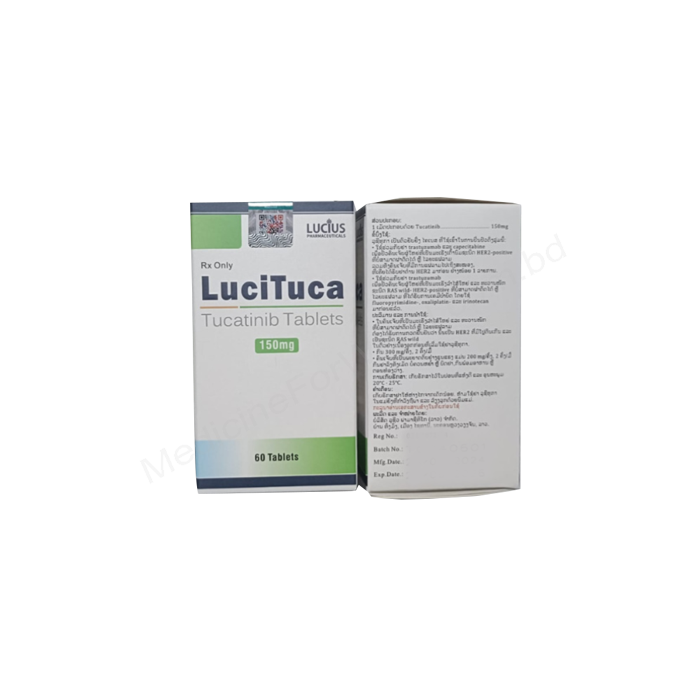
  • LuciTuca (150 mg) pack, manufacturer as listed: Lucius

    LuciTuca

    Product information listed
    Active ingredient as listed
    Tucatinib
    Manufacturer as listed
    Lucius Pharma (manufacturing country listed: Laos)
    Product strength (not a dose recommendation)
    150 mg
    Dosage form
    Tablet
    Pack information
    60 tablets per pot
    Information source
    Product listing dataset[4]
    Information last checked
    October 14, 2026
    Regulatory status
    Not independently verified for this page
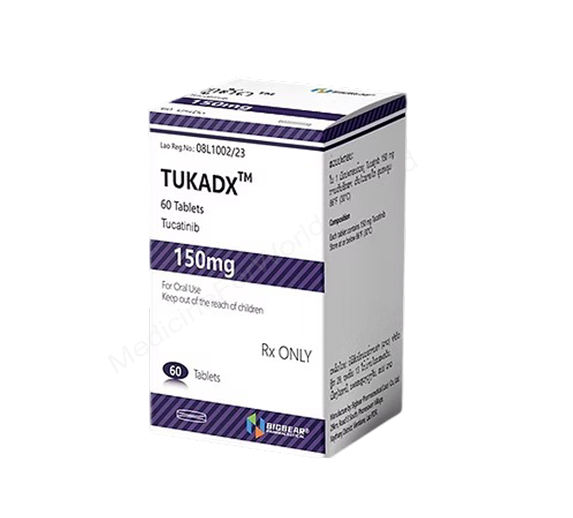
  • Tucadx (150 mg) pack, manufacturer as listed: Bigbear

    Tucadx

    Product information listed
    Active ingredient as listed
    Tucatinib
    Manufacturer as listed
    Bigbear Pharma (manufacturing country listed: Laos)
    Product strength (not a dose recommendation)
    150 mg
    Dosage form
    Tablet
    Pack information
    60 tablets per pot
    Information source
    Product listing dataset[4]
    Information last checked
    October 14, 2026
    Regulatory status
    Not independently verified for this page
  • Tucatin

    Product information listed
    Active ingredient as listed
    Tucatinib
    Manufacturer as listed
    Beacon Pharmaceuticals PLC (manufacturing country listed: Bangladesh)
    Product strength (not a dose recommendation)
    150 mg
    Dosage form
    Tablet
    Pack information
    28 tablets per box (Alu-Alu blister; manufacturer page)
    Information source
    Product listing dataset[4]
    Information last checked
    October 14, 2026
    Regulatory status
    Not independently verified for this page

Product listing data last checked October 14, 2026.

Originator

Originator medicine: Tukysa (Seagen / Pfizer)

Tukysa is the originator tucatinib medicine, first approved by the US FDA on 17 April 2020 under Seagen, now part of Pfizer. In the European Union it was authorised on 11 February 2021 (Pfizer Europe MA EEIG). The originator itself is not part of the Medicine for World listing on this page; its card links to the official US prescribing information. Other products represented as containing tucatinib are made by other manufacturers and sold under their own brand names.[1][2][3]

The originator is shown here separately from the other listed products.

Brand name
Tukysa[1][3]
Active substance
Tucatinib[1]
Company
Seagen, a Pfizer company (EU authorisation holder: Pfizer Europe MA EEIG)[1][3]
Strengths in the US label
Tablets 50 mg and 150 mg[1]
First approvals
United States 17 April 2020 · European Union 11 February 2021[2][3]
Pack in the US label
Tablets[1]
Comparison

Tucatinib generic vs originator medicine

This comparison covers identity and listing information only. It does not establish regulatory approval, pharmaceutical equivalence, bioequivalence, quality, safety or clinical effectiveness.

AttributeOther listed tucatinib productsOriginator (Tukysa)
Active substanceTucatinib, as listed. Formulation details are not fully stated in some product listings.[4]Tucatinib[1]
Brand nameEach manufacturer's own brand name (5 products listed, for example Tucaxen, Tukanic, LuciTuca)[4]Tukysa (US and EU)[1][3]
CompanyEverest, Ziska, Lucius, Bigbear and Beacon as named in the listings; manufacturing country listed: Bangladesh for Everest, Ziska and Beacon, Laos for Lucius and Bigbear[4]Seagen / Pfizer[1][3]
Dosage formTablet, as listed[4]Film-coated tablets (US label)[1]
Strength150 mg for all listed products[4]Tablets 50 mg and 150 mg (US label)[1]
Pack30 or 60 tablets per pot, or 28 tablets per blister box, as listed[4]Not listed by Medicine for World[4]
Regulatory approvalVaries by product and country. Not independently verified for this page. Check with your national medicines authority.US FDA approval 17 April 2020 · EU authorisation 11 February 2021[2][3]
ClassificationProduct represented by its manufacturer or supplier as containing tucatinib. Regulatory classification must be confirmed in the relevant jurisdiction.[4]Originator product[1][2]
What must be the sameSame active ingredient, strength, dosage form and route of administration as the originator, where the product is approved as a generic[5]Reference product[1]
BioequivalenceMust deliver the same amount of active ingredient at the same rate and extent as the originator[5][6]Reference product for the comparison[6]
Clinical trial dataDoes not have to repeat the originator's animal and clinical studies; shows equivalence to the originator instead[5][6]Full safety and efficacy programme submitted for approval[2][6]
Inactive ingredients and appearanceMay differ (for example colour or excipients); minor differences are generally allowed and rarely matter clinically[6]Its own formulation and appearance[1]
Manufacturing standardsMade under the same strict good-manufacturing-practice standards as the originator; plants are inspected[5]Same standards[5]
PriceTends to cost less, because the maker does not repeat the original studies[5]. No prices are shown on this page.Usually higher[5]
Market entryGenerally approved once the originator's patents and exclusivities have expired or been successfully challenged[5]Protected by patents and marketing exclusivity during that period[5]
Safety

Side effects and important warnings

The information below summarises the US prescribing information. It is not complete; read the full label and talk to your doctor.[1]

Boxed warning: severe and fatal liver injury. The current US label for Tukysa carries a boxed warning for hepatotoxicity: severe and fatal liver injury can occur, especially after rechallenge. Liver tests (ALT, AST, bilirubin) are checked before and during treatment, and dosing is withheld, reduced or stopped according to severity. Other warnings are severe diarrhea (with dehydration, low blood pressure, acute kidney injury and death), embryo-fetal toxicity, and a rise in serum creatinine without true kidney damage (tucatinib blocks tubular creatinine secretion). Label wording and warnings differ between regions, so check the EU product information as well.[1][3][4]

Adverse reactions in the HER2CLIMB trial (Tukysa + trastuzumab + capecitabine vs placebo + the same)

Side effectShare of patients
Diarrhea81% (placebo 53%)
Palmar-plantar erythrodysesthesia (hand-foot syndrome)63% (placebo 53%)
Nausea58% (placebo 44%)
Hepatotoxicity42% (placebo 24%)
Vomiting36% (placebo 25%)
Stomatitis32% (placebo 21%)
Decreased appetite25% (placebo 20%)
Anemia21% (placebo 13%)

Other warnings in the label

  • Hepatotoxicity (boxed warning): severe and fatal liver injury can occur; check liver function before starting and during treatment, then withhold, reduce or permanently stop as the label directs
  • Diarrhea: in HER2CLIMB 81% of patients had diarrhea (12% grade 3, 0.5% grade 4); it can lead to dehydration, low blood pressure, acute kidney injury and death, so antidiarrheal treatment and dose changes are part of the label
  • Embryo-fetal toxicity: Tukysa can cause fetal harm; pregnancy status is checked before starting
  • Serum creatinine can rise by about 29–32% within 21 days without true kidney impairment; other measures of kidney function can be used to assess it
  • Serious adverse reactions occurred in 26% of patients in HER2CLIMB; 6% stopped treatment and 21% had a dose reduction because of adverse reactions
  • In the colorectal trial (MOUNTAINEER, tucatinib + trastuzumab) the most frequent reactions were diarrhea (64%), fatigue (44%), rash (37%) and nausea (35%)
  • The label for the breast-cancer maintenance combination reports diarrhea in 73% and hepatotoxicity in 44% of patients (grade 3 hepatotoxicity 15%)

Interactions, pregnancy and fertility

  • Strong CYP2C8 inhibitors (for example gemfibrozil) raised tucatinib exposure about 3-fold: avoid, or reduce to 100 mg twice daily.
  • Strong CYP3A inducers (for example rifampin) and moderate CYP2C8 inducers lower tucatinib exposure: avoid.
  • Tucatinib inhibits CYP3A: midazolam exposure rose 5.7-fold; avoid CYP3A substrates where small changes could cause serious toxicity.
  • P-gp substrates such as digoxin: consider reducing the dose of the other medicine.
  • Contraception: females of reproductive potential and male partners of such females should use effective contraception during treatment and for at least 1 week after the last dose.
  • Breastfeeding: do not breastfeed during treatment and for at least 1 week after the last dose. Animal studies suggest tucatinib may impair male and female fertility.
Dosing

How tucatinib is taken (US label)

Tucatinib is taken by mouth twice a day, about 12 hours apart, with or without food, swallowed whole. Your doctor decides the dose and the treatment duration.[1]

UseDaily doseNotes
All indications300 mg twice dailyTwo 150 mg tablets twice daily; until disease progression or unacceptable toxicity
HER2-positive breast cancer, after prior anti-HER2 therapy300 mg twice dailyTogether with trastuzumab and capecitabine; capecitabine 1000 mg/m² twice daily within 30 minutes after a meal on days 1–14 of each 21-day cycle
HER2-positive breast cancer, maintenance300 mg twice dailyTogether with trastuzumab and pertuzumab after induction therapy
RAS wild-type HER2-positive colorectal cancer300 mg twice dailyTogether with trastuzumab; HER2 and RAS status are confirmed before starting
Adverse reaction needing a lower dose250 mg, then 200 mg, then 150 mg twice dailyStop treatment if 150 mg twice daily is not tolerated
With a strong CYP2C8 inhibitorAvoid; if unavoidable, 100 mg twice dailyReturn to the previous dose after the inhibitor is stopped
Severe liver impairment (Child-Pugh C)200 mg twice dailyLiver tests are monitored before and during treatment

The doses in the table are US label information, not a personal recommendation. Tablets are 50 mg and 150 mg.[1]

How it works

Tucatinib is a kinase inhibitor that selectively blocks the HER2 receptor, which drives growth in HER2-positive cancer cells.[1]

It is used together with other HER2-directed medicines (trastuzumab, with capecitabine or pertuzumab) depending on the cancer type and stage, as set out in the label.[1]

Enquiry process

How an availability enquiry works

  1. Submit an enquiry

    Tell us your country and the product information you are looking for.

  2. Eligibility review

    Medicine for World reviews destination-country restrictions and may request prescription or treatment documentation through a secure channel.

  3. Receive available options

    If the request can lawfully be supported, you may receive current product information, availability and a quotation.

  4. Complete any eligible transaction separately

    Any transaction is subject to prescription requirements, supplier checks, local law, import rules and final confirmation.

Submitting an enquiry does not guarantee availability, regulatory eligibility, import permission, delivery or a transaction.

Availability enquiry

Request an availability check

Submit a non-binding enquiry. Medicine for World will review the destination country and available options before requesting any sensitive medical documents.

This service cannot assist with medical emergencies or treatment decisions. Contact your treating healthcare professional or local emergency service.

Do not upload or include prescriptions, medical reports, passport details, payment information or other sensitive personal information in this form.

Selecting a country does not confirm that supply or import is permitted.

How can we reach you?

Provide at least one: email or WhatsApp number.

Include the country code, e.g. +44 7700 900123

Preferred contact method

Keep it general. Do not include medical details.

No payment is taken on this page. Submission does not create an order or guarantee supply.

FAQ

Frequently asked questions about tucatinib

What is tucatinib?

Tucatinib is a prescription-only, twice-daily oral HER2-targeted kinase inhibitor for HER2-positive cancer. The originator brand is Tukysa, made by Seagen (now Pfizer).

What is tucatinib used for?

In the US label, Tukysa is used for HER2-positive breast cancer (with trastuzumab and capecitabine after prior anti-HER2 treatment, or as maintenance with trastuzumab and pertuzumab) and, as an accelerated approval, for RAS wild-type HER2-positive colorectal cancer with trastuzumab. The EU lists the breast-cancer use after at least two prior anti-HER2 regimens. Approved uses differ by country.

Who makes the originator medicine?

Seagen, now part of Pfizer. Tukysa was first approved in the United States on 17 April 2020 and authorised in the European Union on 11 February 2021 (Pfizer Europe MA EEIG).

How is tucatinib taken?

The US label says 300 mg twice daily, about 12 hours apart, with or without food, swallowed whole, until disease progression or unacceptable toxicity. Doses change after certain adverse reactions, in severe liver impairment and with some interacting medicines.

What are the most common side effects?

In the HER2CLIMB trial in the US label, diarrhea (81%), hand-foot syndrome (63%), nausea (58%), liver toxicity (42%) and vomiting (36%) were among the most frequent.

Is there a boxed warning?

Yes. The current US label has a boxed warning for severe and fatal liver injury (hepatotoxicity). It also warns about severe diarrhea, embryo-fetal toxicity and a rise in serum creatinine without true kidney damage.

Which medicines interact with tucatinib?

Strong CYP2C8 inhibitors (such as gemfibrozil) raise tucatinib levels, while strong CYP3A inducers (such as rifampin) lower them. Tucatinib itself raises the levels of CYP3A substrates such as midazolam. Ask your doctor or pharmacist about everything you take.

What does this directory include?

5 products represented by their manufacturers or suppliers as containing tucatinib (Tucaxen, Tukanic, LuciTuca, Tucadx, Tucatin). It is not a complete global list, and inclusion does not mean that a product is authorised in any specific country.

Are the listed products equivalent to Tukysa?

Equivalence is established by the regulator product by product, through bioequivalence data compared with the originator, so it cannot be assumed from a listing alone. The listed products are represented by their manufacturers as containing tucatinib. Their regulatory status and equivalence to Tukysa should be confirmed with your national medicines authority and your doctor.

How can I check availability?

Use the non-binding enquiry form on this page. Medicine for World reviews destination-country rules and may ask for a prescription before offering any option.

What is Medicine For World (MFW)?

Medicine For World (MFW) is a website that offers online medicine-supplying services, providing safe and affordable lifesaving prescription medicines to customers around the world. The website has an extensive collection of medicines for various diseases, such as cancer, viral infections, rheumatoid arthritis, skin conditions, and many more. The website also provides information about the originator, strength, and dosage of each medicine, as well as details of the medicine. The website is licensed and follows international standards of quality and safety.

How much does it cost to access a medicine through your service?

The cost of accessing a medicine through our service depends on several factors, such as the price of the medicine, the shipping fees, the taxes and duties, and the exchange rates. We will provide you with a quote before you place your order. You can pay by credit card, bank transfer, or mobile money. We do not charge any service fees or commissions.

What documents are needed to import a medicine?

You always need a prescription from a doctor in your country. Other documents, like an import license from the Ministry of Health, may be required, depending on your country's regulations. Contact us for information on the required documents for your country.

Transparency

Editorial and medical review

Current editorial and medical-review status is shown below. No independent medical review is claimed until it has been completed.

Written by
Tucatinib Editorial Team
Medically reviewed by
Independent medical review pending
Medical review date
Not yet independently reviewed
Product data last checked
October 14, 2026 (listing details as supplied; regulatory status not verified)
Independent review status
Pending; recheck immediately when official sources change and before adding any new medical claim
Sources

Sources

Medical and regulatory facts come from official product information. Product listing details come from a supplied dataset. Numbers in square brackets on this page refer to the sources below.

  1. [1]
    TUKYSA (tucatinib) US prescribing information – Pfizer-hosted label (revised 10/2026)Indications, strengths, dosing, boxed warning, warnings, adverse reactions, interactions, pregnancy, trial results. Check the current label for later revisions · Accessed: October 14, 2026
    Official source
  2. [2]
    U.S. FDA – Drugs@FDA: NDA 213411, TUKYSAOriginal approval date (17 April 2020) · Accessed: October 14, 2026
    Official source
  3. [3]
    European Medicines Agency – Tukysa: EPAREU authorisation (11 February 2021), authorisation holder and EU indication · Accessed: October 14, 2026
    Official source
  4. [4]
    Product listing dataset supplied by Medicine for WorldBrand name, manufacturer, strength, pack and dosage form compiled from the Medicine for World tucatinib listings and the Beacon Pharmaceuticals product page (Tucatin). These listing details do not by themselves establish regulatory approval or therapeutic equivalence. · Accessed: October 14, 2026
    Supplied data – not independently verified
  5. [5]
    U.S. FDA – Generic Drug FactsSame active ingredient, strength, form and route; bioequivalence; manufacturing standards; cost; approval pathway · Accessed: October 14, 2026
    Official source
  6. [6]
    U.S. FDA – Generic Drugs: Questions & AnswersBioequivalence meaning, no repeat clinical trials, appearance and inactive ingredients, safety monitoring · Accessed: October 14, 2026
    Official source
  7. [7]
    U.S. FDA – FDA approves tucatinib with trastuzumab and pertuzumab for the maintenance treatment of HER2-positive breast cancer (7 October 2026)Date of the maintenance approval (7 October 2026), HER2CLIMB-05 progression-free survival (24.9 vs 16.3 months, HR 0.64) and the hepatotoxicity boxed warning · Accessed: October 14, 2026
    Official source